This is an interesting equation. It says that the power radiated by the particle into space depends upon its rate of change of momentum with respect to its time. It also says that the power radiated is proportional to the charge squared and inversely proportional to the mass squared. Thus for a highly charged, extremely small particle the radiation will be much greater than that for a large particle with a small charge.
The maths proves it but what does it mean "The power radiated is proportional to the charge squared and inversely proportional to the mass squared"?
And what does it mean that the power radiated depends upon its rate of change of momentum?
London Eye, tallest Ferris wheel in the Western Hemisphere
If allowed to free fall, a mass would reach maximim velocity at the bottom of the circle. The turning moment of the wheel would generate a magnetic field at right angles to the direction of the wheel, outwards and parallel to the axle (axis) the same as the earth's magnetic field, but parallel to it.

Diagram of field line os a magnetic di-pole.
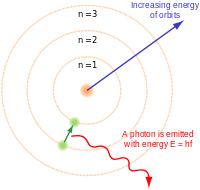
In physics, acceleration is the rate of change of velocity with time.[1] In one dimension, acceleration is the rate at which something speeds up or slows down. However, since velocity is a vector, acceleration describes the rate of change of both the magnitude and the direction of velocity.[2][3] Acceleration has the dimensions L T −2. In SI units, acceleration is measured in meters per second squared (m/s2). (Negative acceleration i.e. retardation, also has the same dimensions/units.)
As acceleration, the unit is interpreted physically as change in velocity or speed per time interval, i.e. metre per second per second.
Example
An object experiences a constant acceleration of one metre per second squared (1 m/s2) from a state of rest, when it achieves the speed of 5 m/s after 5 seconds and 10 m/s after 10 seconds.
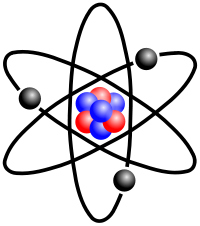
I've included these images many times because it may be easier to visulise what is happening with a picture to help you, that to try to imagine it.
The pendulum does not necessarily directly corelate to anything to do with the circular motion of a mass around a centre of mass, however, if the direction of rotation is not parallel to, say the surface of a planet (a mass) but is perpendicular (straight up and down away from it) then there will be times when the velocity of the orbiting mass (say an atom) has components which are maximised and minimised. You could say something spinning reaches top dead centre, and begins to fall back, gaining momentum as it accelerates, but reaching the bottom point, begins to turn, and is then directed upward again. The motion is very like that of a pendulum.
The simple gravity pendulum[4] is an idealized mathematical model of a pendulum.[5][6][7] This is a weight (or bob) on the end of a massless cord suspended from a pivot, without friction. When given an initial push, it will swing back and forth at a constant amplitude. Real pendulums are subject to friction and air drag, so the amplitude of their swings declines.
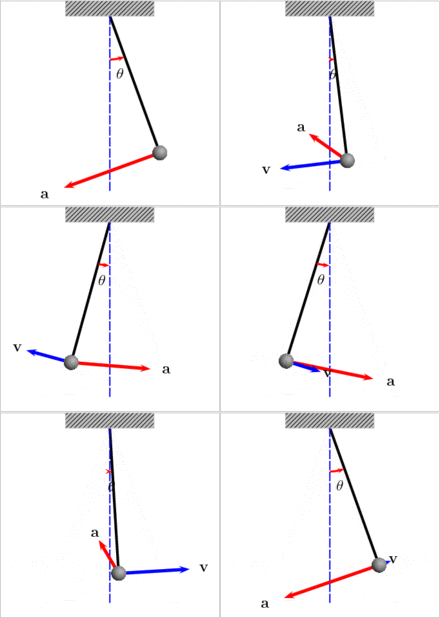
An animation of a pendulum showing the velocity and acceleration vectors (v and a).
Consider the two components of the energy of a pendulum swing carefully. Velocity (v) is maximized by the time the mass has reached the bottom point of the swing, and it then falls to zero. Acceleration (a) (the rate of change of motion) is least at the bottom point and most when it coming to rest at the top of each swing. The total energy P=MV, is equal to the mass times the velocity, so is most when the velocity is greatest, as the mass does not change.
But is that right? Of course this is an idealised situation, where there is no friction on the string, which would be exerting a strong force on the mass when it is passing the bottom point of the swing. But inside the proton and neutron there is very little friction anyway. The particles are flying through space in much the same way that light travels from the sun, or x-rays travel through space. Is it true, that if P (momentum) = mass times velocity, Mass = Momentum divided by velocity? P/V=M? (divide both sides of teh equation by velocity. Ideally we want to remove velocity from the equation completely, to eliminate time, but can we do it?